Custom apparel rush orders are the ones that make everybody’s stomach drop a little. The event is coming up, the shirts haven’t been ordered, and someone asks, “Can you just get them done fast?” We’ve been decorating apparel out of Mechanicsburg since 1917, so we’ve been on both ends of that phone call more times than we can count. Here’s the plain version of what decides how fast custom apparel rush orders move, and what you can do to help.
Custom apparel rush orders aren’t a magic button
Let’s get the awkward part out of the way. We’re not going to quote you a number of days in a blog post, and we’re not going to promise anything we can’t see yet. Every order is different, and a number without context is a trap.
What we can do is show you what actually controls the clock. Once you know those pieces, custom apparel rush orders get a lot less scary, because most of the delay comes from things that are fixable early on.
There are five big ones: art approval, blank garments, the decoration method, our production schedule, and how complete your order details are. Some of them you control. Some we control. A couple belong to the supplier. We’ll walk through each.
Art approval is the biggest lever you hold
If we had to pick one thing that slows down custom apparel rush orders more than anything else, it’s artwork waiting on a decision.
Nothing gets printed or stitched until the art is final and you’ve signed off on it. That sounds obvious, but think about what it involves. Someone sends a logo. Our team checks that it’s usable, cleans it up or rebuilds it if needed, and sends a proof. Then somebody has to look at the proof, maybe show it to a boss or a committee, and reply. If the proof goes to a person who’s out of the office, the whole order sits and waits.
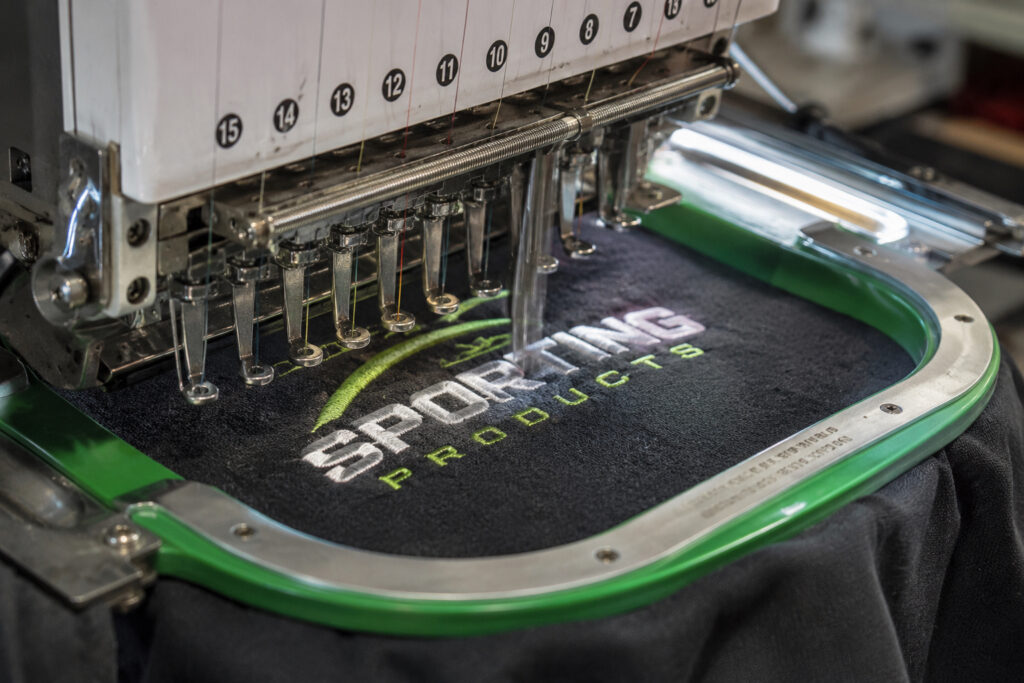
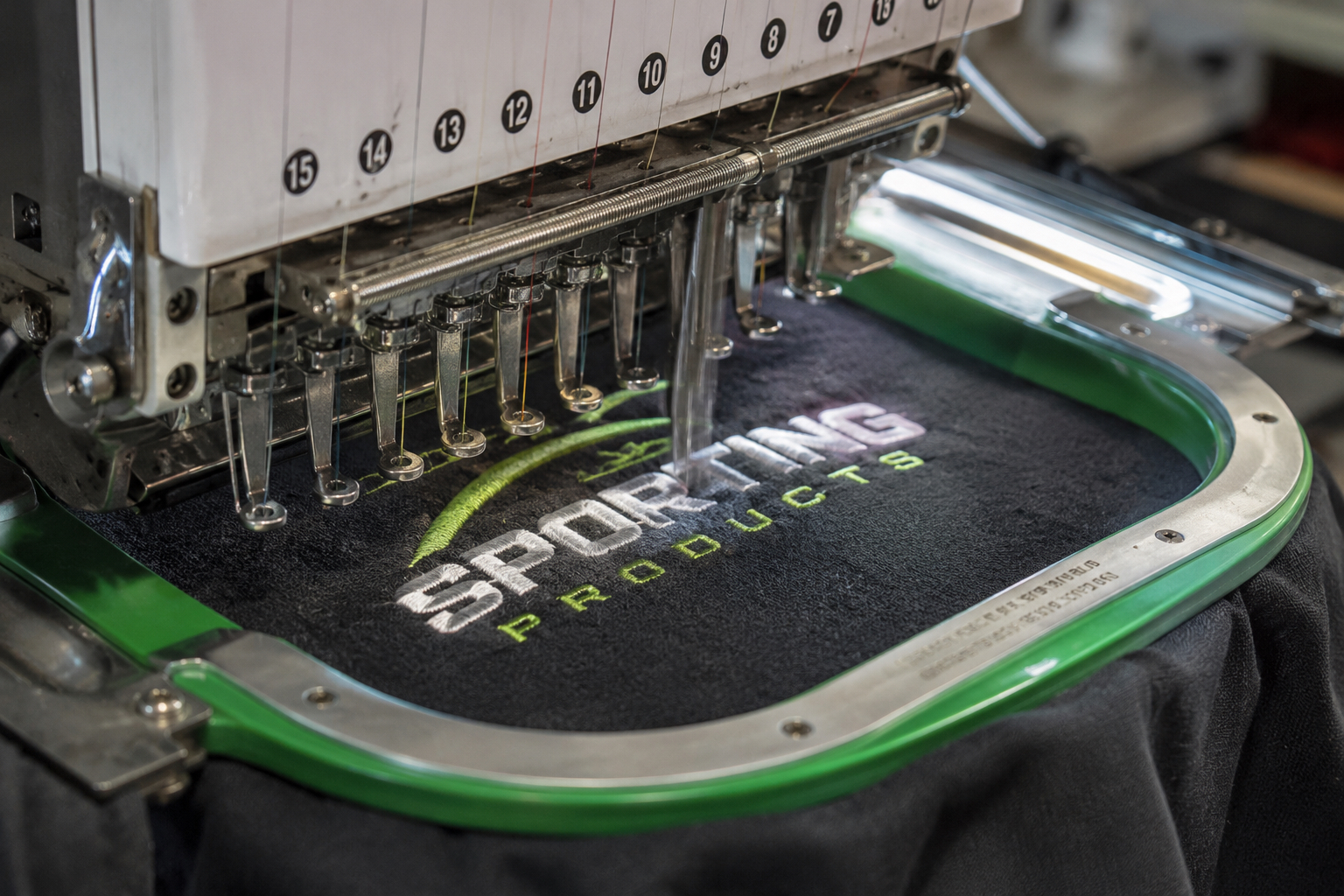
Embroidery adds a step. Your logo has to be converted into a stitch file before the machine can run it, and a good conversion takes real attention. Rushing that part is how you end up with fuzzy lettering.
Here’s what helps:
Send vector artwork or the highest quality file you have, not a screenshot
Tell us up front who has to approve the proof
Answer proofs quickly, even if the answer is “change this one thing”
If you’re still sketching ideas, our design ideas page is a good place to get unstuck before you reach out. And if you’d like to see who’s on the other end of your proof, meet the folks on our team.
Blank garment availability is the part nobody can fully control
Your design isn’t the only thing that has to show up. The garment does too.
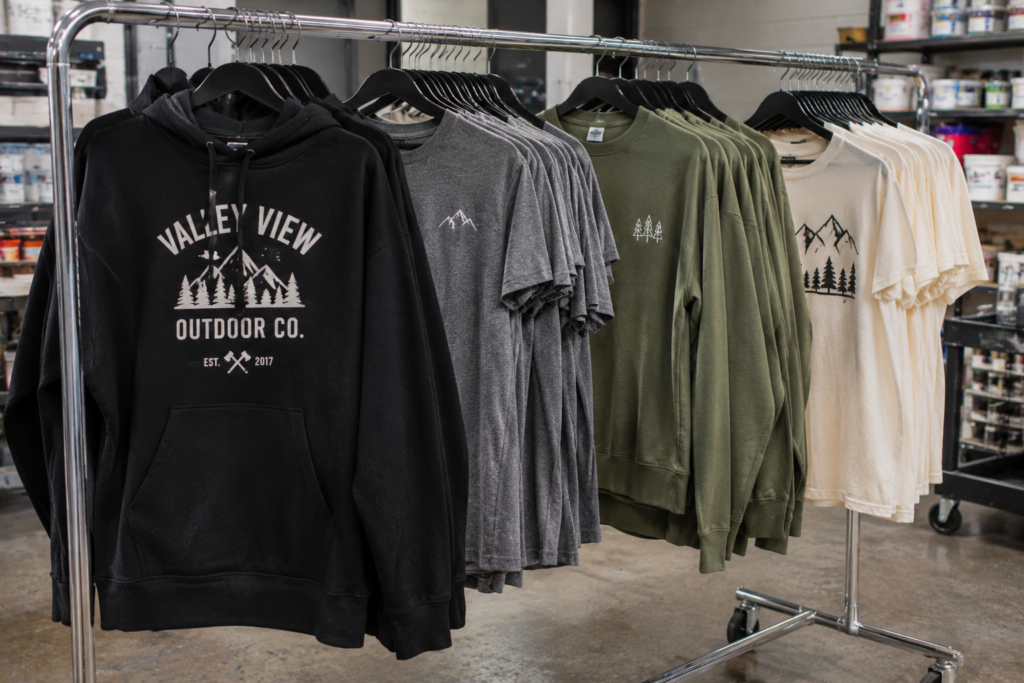
Blanks are the plain shirts, hoodies, polos and hats we decorate, and we order them from suppliers. A popular style in a common color is usually easy to get. A less common color, an unusual size range, or a style that’s suddenly in demand everywhere can be a different story. Sizing matters more than people expect. A big run of one color in a full size range puts more pressure on stock than a smaller order does.
This is where custom apparel rush orders can quietly go sideways. Someone falls in love with a specific hoodie in a specific color, and then it turns out to be backordered. Nobody did anything wrong. It just happens.
Our advice is to be flexible on the garment even if you’re not flexible on the date. Browse our catalogs and pick a first choice and a backup. If your first choice is tight, we can switch to the backup without losing days to a second round of back and forth. You can also look through our apparel options to see what’s out there before you commit.
The decoration method changes the shape of the job
Screen printing, embroidery, DTG, DTF and heat press all work differently, and each one has its own setup and its own pace.
Screen printing needs a screen made for every color in your design, and those screens have to be prepped before a single shirt gets printed. Once everything is set, it moves quickly on larger runs. Embroidery depends on the stitch file and on how dense the design is. A big, heavy logo takes longer to stitch than a small left-chest mark. Digital methods skip some of the setup, which can help on smaller or more complex orders, but they have their own limits on fabric and volume.
So when you ask us about custom apparel rush orders, one of our first questions is what method makes sense, not just what method is fastest. A fast method that gives you a bad result isn’t really fast. You’ll be reordering.
Number of print locations matters too. A shirt with a front print is a simpler job than one with a front, a back and both sleeves. Cutting a location is sometimes the easiest way to protect a date, and it’s worth asking about.
Our production schedule is a real thing
This one is simple, and it’s also the part that surprises people. We’re not a one-job shop. Your order goes into a schedule alongside everything else we’re running, and some seasons are busier than others.
Spring sports, graduation, back to school, fall football and the holiday run all make for crowded weeks. If you call during one of those stretches, we’ll tell you honestly what the schedule looks like. If you call during a quieter stretch, you generally have more room.
That doesn’t mean we won’t try. We handle custom apparel rush orders regularly, and we’ll look for a way to make your date work. But we’d rather tell you the truth up front than promise something and scramble. Your in-hand date is the most useful piece of information you can give us, so give it to us on the first call.
A clear order moves faster than a fuzzy one
The fifth factor is the least glamorous and probably the most fixable. It’s how complete your order is when it reaches us.
An order that’s ready to go has the artwork, the garment choice, the colors, the full size breakdown, the number of pieces, the locations and the delivery date or pickup plan. An order that’s missing half of that stops while we chase answers.
The classic slowdown is the size count. “We’ll figure out sizes later” turns into a delay, because garments can’t be ordered or decorated until we know what we’re making. If you’re collecting sizes from a team or a staff, start early and set a cutoff. Better yet, ask us about an online store, which lets each person pick their own size and pay on their own so you’re not the one chasing people down.
How to set up custom apparel rush orders for success
If your date is tight, here’s the short checklist we’d hand you.
Lead with the date. Tell us the event date or the in-hand date on the first message, and say whether it’s firm or flexible.
Send real artwork. A clean logo file beats a photo of a banner every time.
Name your decision maker. Tell us who signs off on proofs and make sure they’re reachable.
Pick a backup garment. A second choice protects you from stock surprises.
Know your sizes. Even a rough breakdown gets us moving sooner than none.
Keep it simple where you can. Fewer colors, fewer locations and a simpler design all make a tight date easier.
Do those things and you’ve taken most of the risk out of custom apparel rush orders before we’ve printed anything.
What we won’t do
We won’t tell you everything is possible when it isn’t. We also won’t hide behind vague language. If your date can’t work with your first plan, we’ll say so and then offer options, like a different garment, a simpler design, or splitting the order so the most important pieces come first.
That’s the benefit of working with a family-owned shop and not a faceless order form. You get a person who looks at your actual order and tells you what they see.
Frequently asked questions
How fast can custom apparel rush orders be done? It depends on your art, the garments, the method and our schedule. We can’t give a fair answer without knowing those things, so send us the details and we’ll tell you what’s realistic for your order.
Do custom apparel rush orders cost more? Sometimes, depending on what the schedule requires. We’ll go over any added cost with you before we start, so there are no surprises.
What slows an order down the most? Late proof approvals and unconfirmed sizes are the two we see most. Garment stock comes in right behind them.
Can I change my design after I approve the proof? Changes after approval can affect your timeline, because the work may need to be redone. Check the proof carefully the first time.
Got a date on the calendar? Let’s talk
If you’ve got a deadline and a pile of questions about custom apparel rush orders, send us what you have and tell us when you need it. We’ll give you a straight answer. Start a project or call 717-766-6600.
Brooks Minkoff
Hi I'm Brooks, I'm the Director of Marketing and a Sales Rep at Shenk Company. I've worked in the apparel decorating industry for 5 years. I'm an Army Veteran who loves skiing and running.

 Blanks are the plain shirts, hoodies, polos and hats we decorate, and we order them from suppliers. A popular style in a common color is usually easy to get. A less common color, an unusual size range, or a style that’s suddenly in demand everywhere can be a different story. Sizing matters more than people expect. A big run of one color in a full size range puts more pressure on stock than a smaller order does.
This is where custom apparel rush orders can quietly go sideways. Someone falls in love with a specific hoodie in a specific color, and then it turns out to be backordered. Nobody did anything wrong. It just happens.
Our advice is to be flexible on the garment even if you’re not flexible on the date. Browse our catalogs and pick a first choice and a backup. If your first choice is tight, we can switch to the backup without losing days to a second round of back and forth. You can also look through our apparel options to see what’s out there before you commit.
 Screen printing needs a screen made for every color in your design, and those screens have to be prepped before a single shirt gets printed. Once everything is set, it moves quickly on larger runs. Embroidery depends on the stitch file and on how dense the design is. A big, heavy logo takes longer to stitch than a small left-chest mark. Digital methods skip some of the setup, which can help on smaller or more complex orders, but they have their own limits on fabric and volume.
So when you ask us about custom apparel rush orders, one of our first questions is what method makes sense, not just what method is fastest. A fast method that gives you a bad result isn’t really fast. You’ll be reordering.
Number of print locations matters too. A shirt with a front print is a simpler job than one with a front, a back and both sleeves. Cutting a location is sometimes the easiest way to protect a date, and it’s worth asking about.