
Screen printing vs embroidery is the first question most people ask us, and the honest answer is “it depends on the garment, the logo and where it’s going to live.” Throw DTG and DTF into the mix and it gets murkier fast. We’ve been decorating apparel out of Mechanicsburg since 1917, so here’s the plain-language version, trade-offs included.
Screen printing vs embroidery: the short version
Here’s what each method actually is, in one sentence apiece.
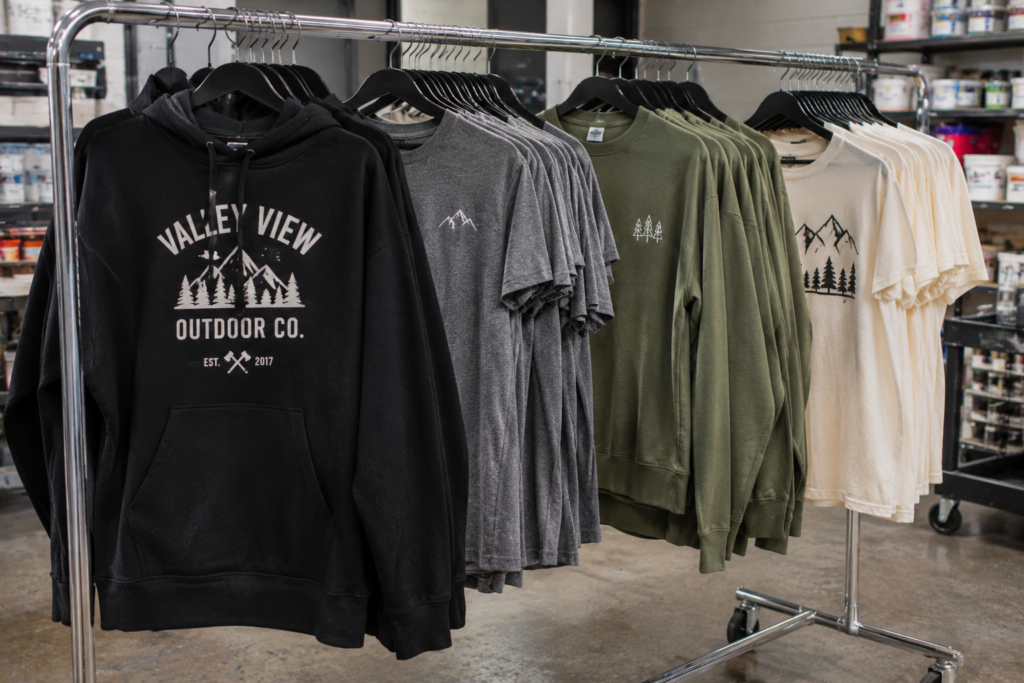
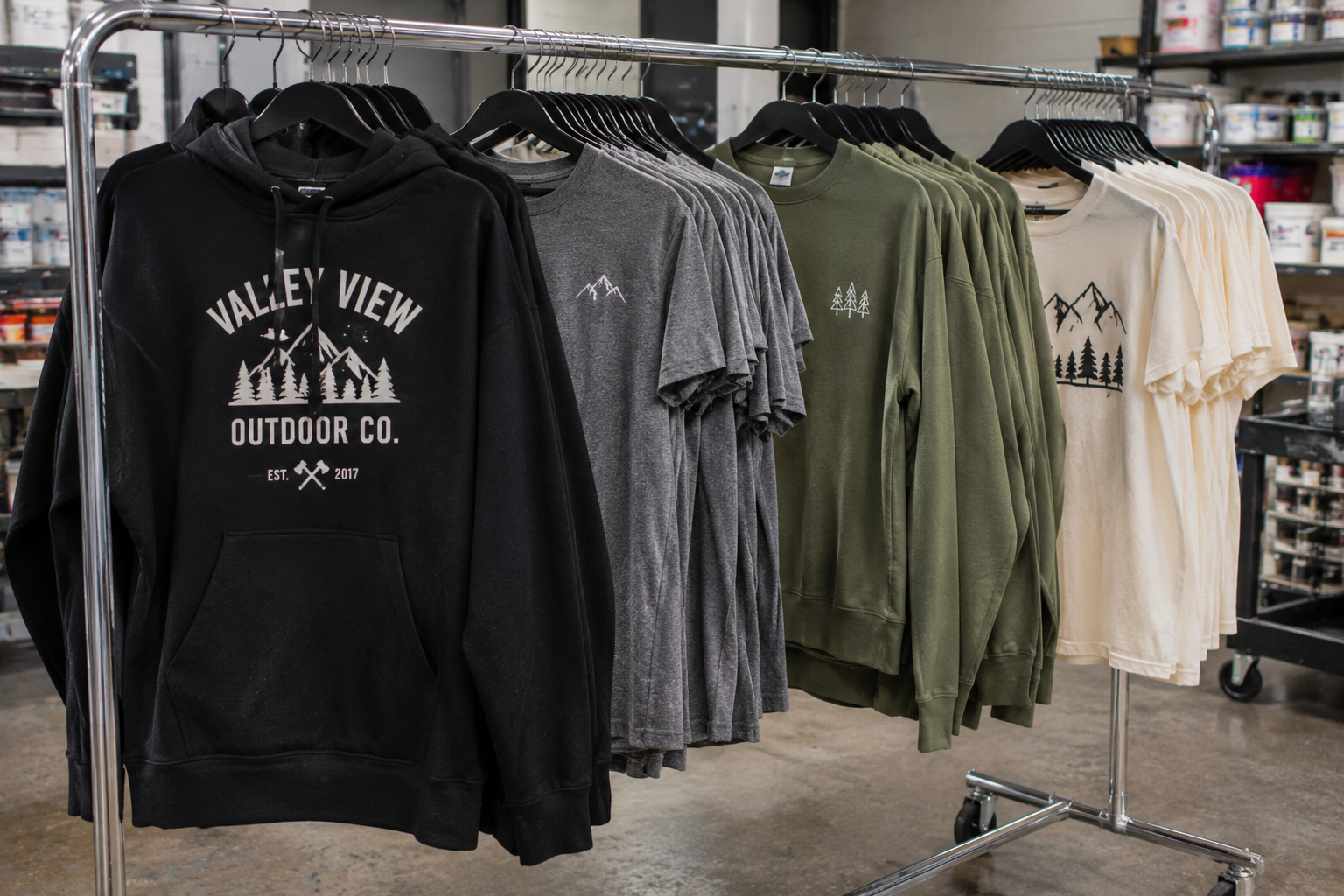
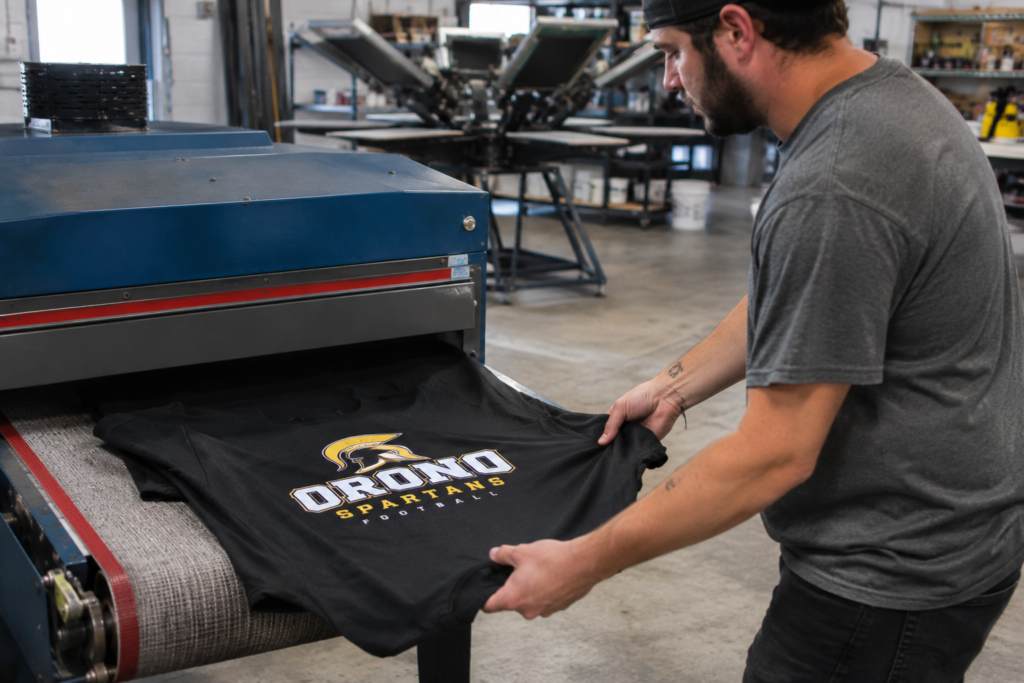
Screen printing pushes ink through a mesh screen onto the garment, one color at a time.
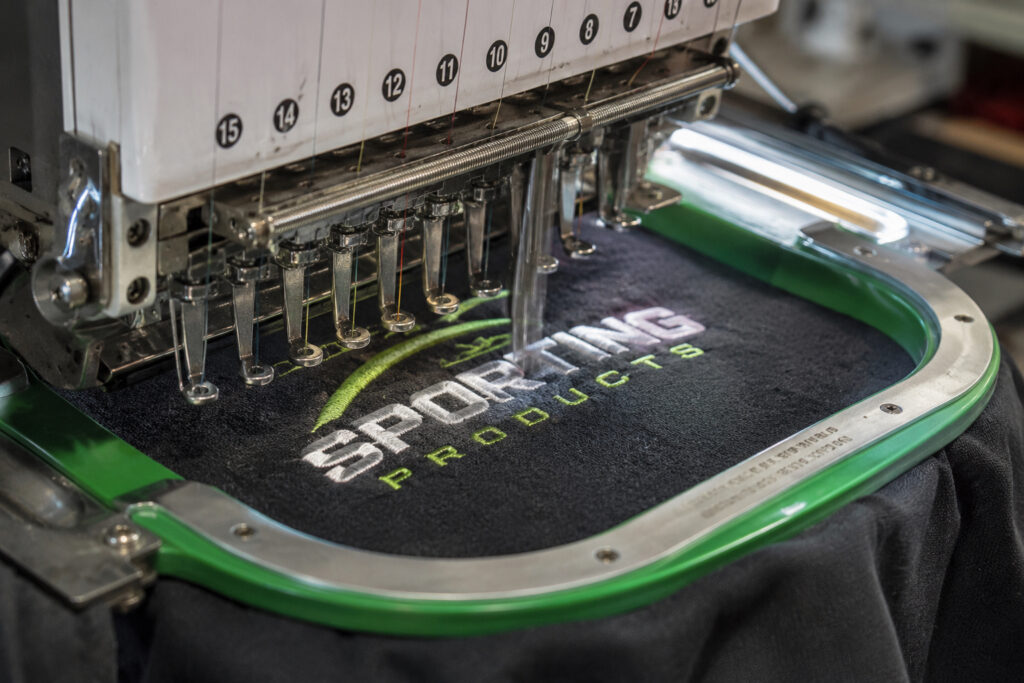
Embroidery stitches thread into the fabric to build your logo.
DTG (direct-to-garment) prints the design straight onto the shirt with a specialized inkjet printer.
DTF (direct-to-film) prints the design onto a film, then heat-presses it onto the garment.
None of these is the best one. Each is the best at something, and each has a spot where it falls short. The rest of this post is about telling those spots apart so you don’t pay for the wrong one.
Screen printing: the workhorse
Screen printing is what most people picture when they think custom shirts, and there’s a reason it’s been around so long. The ink sits on top of the fabric, the colors come out bold, and a well-printed shirt holds up through a lot of washing.
What it does well:
- Bold, solid colors that stay bright
- Larger runs, where the setup work gets spread across many shirts
- Team shirts, event shirts, crew shirts and anything that needs to look consistent across a big group
- Sweatshirts, tees and totes where a flat, graphic look is what you want
Where it falls short:
- Every color in your design needs its own screen, so a design with lots of colors adds setup work
- Photographic images and fine gradients are harder to pull off
- Very small orders can feel like a lot of setup for a small payoff
If you’re leaning this way, take a look at our screen printing services in Harrisburg to see how we handle it.
Embroidery: the polished one
Embroidery is thread, not ink. It has texture, it catches the light, and it makes a logo look like it belongs on the garment instead of sitting on it. That’s why you see it on polos, jackets and hats.
What it does well:
- A professional, finished look on polos, quarter-zips, jackets and caps
- Durability, since thread tends to outlast ink on garments that get worn hard
- Logos with clean lines and a limited number of colors
- Items you want to look the same year after year
Where it falls short:
- Tiny text and very fine detail can turn muddy in thread
- Photos and gradients don’t translate well
- Big, full-coverage designs get heavy, and heavy stitching can make a lightweight shirt pucker
- It’s the wrong choice for a thin, stretchy performance fabric in many cases
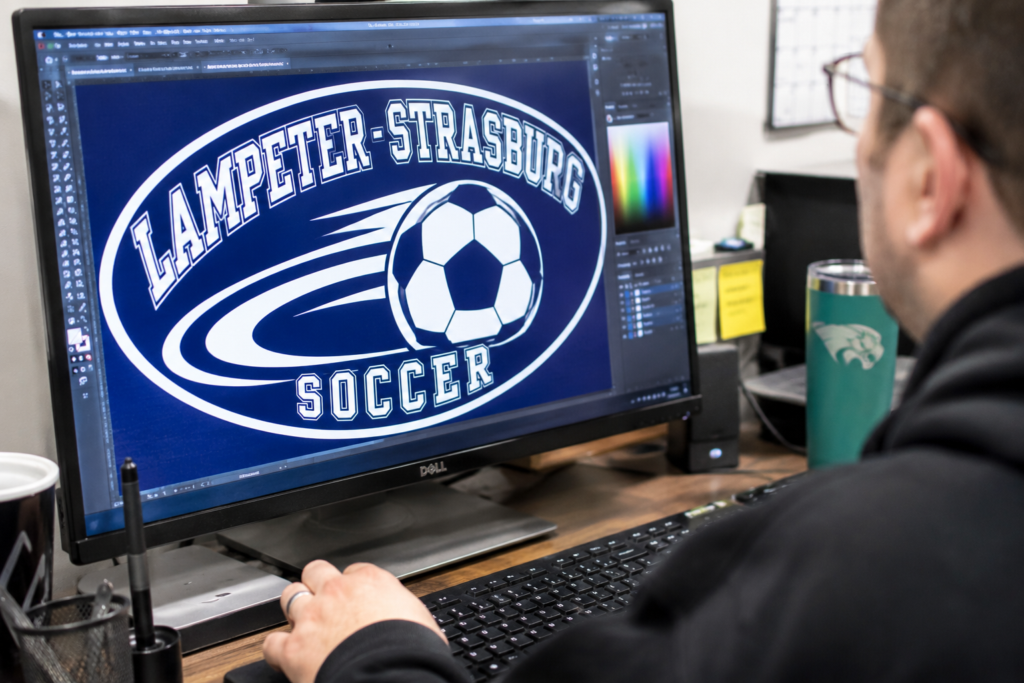
Before we stitch anything, your artwork gets converted into a stitch file, a process called digitizing. A good digitized file is a big part of whether a logo looks crisp or fuzzy, so don’t skip that conversation. Our embroidery services in Harrisburg page walks through what we do.
DTG: the detail specialist
DTG works like a big printer for shirts. Because it prints the image directly instead of building it from separate screens, it handles detailed artwork, photos and lots of colors without much fuss.
What it does well:
- Complex, colorful artwork and photo-style images
- Smaller runs, where building screens wouldn’t make sense
- Designs that vary from one garment to the next
Where it falls short:
- It works best on cotton and cotton-rich garments, and it’s pickier about fabric than other methods
- On dark garments, the print can feel softer and less punchy than a screen print
- It’s generally a poor match for big runs, where screen printing tends to make more sense
DTG is a good tool. It just isn’t a good tool for every job, and anyone who tells you it replaces screen printing hasn’t looked at a big group order.
DTF: the flexible newcomer
DTF has gotten a lot of attention in the last few years, and some of it is deserved. Because the design is printed on film and transferred with heat, it can go onto a wider range of fabrics than DTG, and it handles full-color artwork well.
What it does well:
- Full-color designs, including detailed ones
- A wider range of fabrics and garment types
- Smaller and mid-sized orders with several colors in the artwork
Where it falls short:
- The transfer sits on top of the fabric and can have a different feel than a traditional screen print
- It isn’t a stitched, textured look, so it won’t give you what embroidery gives you
- Durability depends heavily on how well it’s applied, which is one reason to use a shop that does it carefully
We already have a post on this one, so if DTF vs screen printing is the whole question for you, read our earlier comparison first and come back.
So how do you actually choose?
Skip the spec sheets and ask yourself four questions. When people ask us about screen printing vs embroidery, the garment and logo usually settle it.
1. What’s the garment? A polo or a cap usually points to embroidery. A tee or hoodie usually points to screen printing, or to DTG or DTF if the art is complicated. Screen printing vs embroidery on a hat comes down to the style of the cap and the logo, which is why we built a headwear designer so you can see it first.
2. What does the artwork look like? A simple logo with a few solid colors works almost everywhere. A photo, a gradient or a design with a dozen colors narrows your options quickly.
3. How many pieces do you need? Larger runs tend to favor screen printing and embroidery, because the setup work gets spread across more garments. Smaller or mixed orders can open the door to DTG or DTF.
4. Where and how will it be worn? A uniform that gets washed constantly needs durability up front. A shirt for a single event can be more flexible. A customer-facing polo should look sharp for years.
Answer those four and you’ll know more than most people do when they start.
What affects timing and cost
We’re not going to throw numbers at you in a blog post, because every order is different and a number without context is a trap. What we can do is tell you what moves the needle.
Cost is driven by:
- The garment you choose
- The decoration method
- How many colors (screen printing) or how many stitches (embroidery) are in the design
- How many pieces you’re ordering
- How many locations get decorated, such as front, back and sleeves
The screen printing vs embroidery cost question comes up constantly, and the real answer is that it flips depending on the logo. A simple one-color design usually leans one way. A dense, stitch-heavy logo can lean the other. That’s why we quote each order individually.
Timing is driven by:
- How quickly the artwork gets finalized and approved
- Whether the garments you want are in stock at our suppliers
- The decoration method
- What’s already on our production schedule
- How firm your in-hand date is
The single best thing you can do for your timeline is tell us your event date when you first reach out. If it’s tight, we’ll tell you honestly what’s possible. If you’re planning ahead, you get more options and fewer surprises.
Can you mix methods?
Screen printing vs Embroidery doesn’t have to be an either-or choice on a bigger order. A common setup is embroidered polos for the staff and printed tees for the crew or for giveaways, all carrying the same logo so the whole look matches. That way each garment gets the method that suits it, instead of forcing one method onto everything.
Not sure what the logo will look like on each? Browse our design ideas for inspiration, or look through our apparel options to see what garments are out there.
Frequently asked questions
What’s the real difference in screen printing vs embroidery? Screen printing lays ink on top of the fabric, which makes it great for bold graphics and bigger group orders. Embroidery stitches thread into the fabric, which gives a textured, professional look that suits polos, jackets and caps.
Which one lasts longer? Both hold up well when done right. Embroidery tends to be the tougher choice for garments that get worn and washed hard, while a good screen print holds its color for a long time too. Garment quality and care matter as much as the method.
Can you print a photo on a shirt? Yes, though not with every method. DTG and DTF are usually the better fits for photographic or highly detailed artwork. Send us the image and we’ll tell you what will look good.
Do I need to know which method I want before I contact you? No. Tell us what the garment is, who’s wearing it and when you need it. Choosing the method is part of our job.
Let’s figure out your order
Still stuck on screen printing vs embroidery? Send us your logo and tell us what you’re making. We’ll tell you what we’d pick and why, even if the answer isn’t the one that sounds fanciest.
Start a project or call 717-766-6600.